
Hal Clement's "Half Life" (novel, hard sf): Looking for prelife on Titan
Story summary.
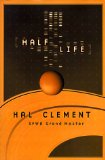
Life on earth has been failing for 2 centuries. More new diseases are springing up faster than cures can be found. And it's not restricted to humans - a lot of (all?) earth-life seems to be affected. Human population is far below its twentieth century levels, & pretty much everyone is badly sick.In an ultimately disparate move, a project is launched to understand pre-life: "Fill the information gaps between the mineral & biological worlds." To this end, a group of 50 individuals is sent to Titan - almost certainly a one way trip since most are terminally sick, as is much of the general population. It's hoped that Titan might harbor the beginnings of life, & we just might figure something about the chemical basis of life to have hope in future.
Of the 50 adventurers, less than 2 dozen will survive till their station in orbit around Titan is set up. A few more will die through the story.
Most of the story is the various individuals' adventures on Titan, a good part dealing with not uncommon local surface structures that are clearly not alive but that can sense "food" (in some sense), can slowly move towards it, & eventually "consume" it. By the end of the story, the group will have a promising hypothesis for future research that just might hold hope for the mankind's future...
Notes.
See also.
- Arthur Clarke's "Before Eden": Discovery of a far more advanced but still prelife in high altitudes of Venus.
Fact sheet.
First published: 1999.Buy from Amazon.com.
Rating: A.
Related: Stories of Hal Clement (annotated selection of some of his good stories).





5 comments:
Clement is definitely one of those must-read authors-i did rent this from the library once, years ago, but wasn't in the right frame of mind at the time. I have his Iceworld on my shelf to read soon. And of course he has the coolest first name ;)
"coolest first name": His real name is Harry Stubbs. Hal Clement is a pen name he used for sf works.
He's also supposed to have been an accomplished painter, though I haven't seen any of his art works.
Hmm, never knew his real nmae! Hal is cool though! I'd like the name Hal if I became a published writer!
I personally didn't really like this book all that much. :P I read it for my book project in honors biology and it was really less story than it was Hal using characters to voice his theories and such. He didn't do the best job in getting you to relate with any of the characters. So I suppose if you prefer non-fiction anyways it would be okay.
I wonder if reading it because it was a forced activity - the book project in class - made it less interesting. With very rare exceptions, I mostly hated the literature they made me read in school.
Post a Comment