Showing posts with label 1967. Show all posts

Thursday, October 11, 2012

Mack Reynolds' "Computer War" (novel, war): Fighting a full scale war with guerrilla tactics

Cover of the novel Computer War by Mack Reynolds
While mostly a good read, it kept putting me off because of totally illogical references: a far future world away from earth, when thousands of worlds have been colonized by man. And the only examples characters talking to each other can come up with are those someone living in US or Europe during mid-1900s might be familiar with!

Story is about an unusual war. This unnamed world has many countries, among them two big powers - Alphaland & Betastan. Former is a dictatorship with better military hardware, & it is now starting a war to conquer Betastan. Betastan refuses to fight by the rules...

Fact sheet.

First published: Analog, June/July 1967.
Among the stories from Astounding/Analog issues edited by John Campbell.
Rating: B.
Related: Stories of Mack Reynolds.

Wednesday, August 29, 2012

Miriam Allen deFord's "The Malley System" (short story, crime)

This is a story about an unusual punishment for hardened criminals: In a world where technology exists to make me replay any desired memories of you, the jailer forces the criminal to repeatedly experience his most heinous crimes - until he gets bored to death & is driven to insanity!

Early parts of the story are descriptions of wanton murders & torture of innocents by a psycho killer.

Malley of title is the name of the "penologist" who invented this system of punishment.

See also.

  1. Pat Forde's "In Spirit": Some jailed 9/11 perpetrators are forced to experience the event from the perspectives of various victims.

Fact sheet.

First published: Harlan Ellison (ed)'s "Dangerous Visions" (1967).
Rating: B.

Thursday, August 23, 2012

Frederik Pohl's "The Day After the Day the Martians Came" (short story)

This story might make better sense to readers familiar with the US of 1960s.

Story summary.

A crowd of media personnel is assembled in a motel, in anticipation of a NASA announcement tomorrow regarding Martians brought by their Mars mission. I missed the point of the story, but the author clarifies that the existence of Martians could unite us & ease white/black tensions of US.

Fact sheet.

First published: Harlan Ellison (ed)'s "Dangerous Visions" (1967).
Download a comic book adaptation from The Bronze Age of Blogs. [via Marooned]
Rating: B.
Related: Stories of Frederik Pohl.

Saturday, June 30, 2012

Robert Silverberg's "Flies" (short story, horror, free)

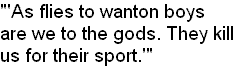
Quote from short story Flies by Robert Silverberg. Story attributes the quote to Lear by Shakespeare.
Rather well hashed theme here - vampire variants that feed not on the blood of the victim but something else. C L Moore wrote a lot of stories of the kind; others too have done their bit. Setup in early parts is strikingly similar to Arthur Clarke's "Playback".

Story summary.

Sole shipwreck survivor in outer solar system is rescued by aliens, & his damaged body regenerated. Aliens also edited his mind - turning him into a pathological killer with a mind capable of transmitting the horror of victim to aliens, thus feeding one of their needs!

We'll see some episodes of the resulting terror unleashed on earth.

Fact sheet.

First published: Harlan Ellison (ed)'s "Dangerous Visions" (1967).
Download full text.
Rating: B.
Related: Stories of Robert Silverberg.

Friday, June 29, 2012

Lester del Rey's "Evensong" (short story, Chritianity, free): God unwanted after 7 days of Creation!

Someone is being chased by men all over the galaxy - someone who once helped uplift Man from savagehood. He is finally cornered by a man in a walled garden on earth. And the being cornered is...

Fact sheet.

First published: Harlan Ellison (ed)'s "Dangerous Visions" (1967).
Download full text from hermiene.net.
Rating: B.
Related: Stories of Lester del Rey.

Thursday, February 23, 2012

Norman Spinrad's "Agent of Chaos" (novel): Autocracy vs democracy vs "chaos"

Cover image of the novel Agent of Chaos by Norman Spinrad
I'm not sure I understand the point of the book, though I loved the later parts:
  1. "Freedom from" (hunger, disease, ...) is a less desirable goal for a population than "freedom to" (do what you want, e.g.). Author uses them in the sense where former is a white list of specific freedoms that can be granted by the rulers, while the later is open ended. That it's impossible to list down the freedoms you should have; an evolving universe constantly offers new opportunities, & the society's default should be that you can go pursue any if you are so inclined.
  2. It's not just the universe that has a tendency to become more chaotic with time (increasing entropy), but societies too. To maintain order in a society requires "social energy". But tendency towards chaos is the natural, hence more desirable, state. In the context of story, I could not disagree; proponents of chaos are opposing a despicable tyranny. But as a general principle?
Story itself pits 3 antagonists against each other:
  1. "Hegemony" runs the government. Descended from former US, Soviet Union, & their allies, it runs a sort of world government that spawns several inhabited planets & moons of Sol, besides earth. At the top of the government is a 10-member oligarchy, partly elected. While there is no hunger or disease in this society, citizens are really treated as cattle: do an "Unpermitted Act" & the punishment is immediate death, citizens are killed at every tiny provocation (& non-provacation too), you need a pass to travel anywhere, ...
  2. "Democratic League" is a rebel group that primarily uses terror to make its point, & is working towards a "free" society. But its ideologues are not very clear on the idea of freedom.
  3. "Brotherhood of Assassins" is a mislabeled group that believes in chaos. To them also, killing innocents is no big deal - so long as it achieves whatever goal. They've been introducing random acts in orderly Hegemony, because ... chaos is good!
First two thirds, or more, has a lot of killings & random acts of terror. Things really start falling in place near end.

Fact sheet.

First published: 1967.
Rating: B.
Included in "grubthrower"'s "Top 10 obscure but superb science fiction novels".
Related: Stories of Norman Spinrad.

Monday, October 17, 2011

Poul Anderson's "To Outlive Eternity" (novella, space opera, free): When a journey in space turned to one beyond the end of time!

This is the original story that was later expanded into author's well known novel, "Tau Zero". "Tau", also appearing in the story, is a parameter from relativity that in some way captures time dilation.

Note many reviewers describe this story as "hard sf". I don't know enough physics to conclude that; some of its physics is obviously cooked up. To me it sounded like space opera, but without guns & aliens.

Story is not always an easy read. Particularly early parts include infodumps that were just meaningless babble for me. But I'm no physicist.

Story summary.

Leonora Christine, a human colonizing ship with 50 men & women aboard, encounters a "small" nebula on its way & cannot avoid unplanned collision with the gaseous body. All is fine after the collision, except the ship has lost ability to decelerate - hence to arrive at its destination!

Damaged portions can be repaired, but they're outside the hull, & for complicated reasons, cannot be repaired except in intergalactic empty space. Thus begins a grand adventure with an unusual happy ending.

Fact sheet.

First published: Galaxy, June & August 1967 as a 2-part serial.
Download full text from Webscription.
Rating: B.
Related: Stories of Poul Anderson.

Thursday, September 30, 2010

Samuel R Delany's "Aye, and Gomorrah" (short story, free): Fetish of sexually normal towards sexually abnormal

This is my second or third Delany story; none have worked for me so far. May be it will work better with readers familiar with US of 1960s? In any case, it appears to be among the better known stories of author.

I've no idea how the title relates to the story.

Story summary.

Maintenance of infrastructure on moon, Mars, & the satellites of Jupiter requires "altered" people ("Spacers"), because of long exposure to radiation. This alteration kills their sexual nature - they're now neither male nor female. The operation is done when they're still kids - "children whose sexual responses are hopelessly retarded at puberty."

Among the normal are "frelks", people with a sexual fetish for spacers. And spacers often oblige, for money.

This story is a collection of vignettes about these contacts - spacers vs frelks. Narrated by an unnamed spacer, part of a group on ground holidays.

Fact sheet.

First published: Harlan Ellison (ed)'s "Dangerous Visions" (1967).
Download full text from Internet Archive.
Rating: B.
Winner of Nebula Award 1967 in short story category.
Nominated for Hugo Award 1968 in short story category.
Among the Ellen Datlow's Sci Fiction's classics.

Monday, May 3, 2010

Poul Anderson's "Outpost of Empire" (novella, armed rebellion, free): Guerrillas crush government forces

I wonder if the inspiration for story came from the process of addition of states to the US? Someone familiar with US history might want to comment.

Story summary.

Two "big powers" are fighting a war: Terran Empire & Merseian Empire. Between them, they control several hundred thousand solar systems.

Freehold is a world on the outer fringes of Terran Empire - some 200 light years from earth, & is peopled by 3 factions:
  1. "Cities": Politically comfortable with normal ways of Empire.
  2. "Free People": Men inhabiting everything outside the Cities. Their political organization is anarchy. They live in close harmony with nature, & are experts at biological weapons & unorthodox ways of using animals & vegetation.
  3. "Arulians": Aliens aligned with Merseians in current war, & living in Cities.
When Freehold was annexed by Terran Empire, the annexation treaty was negotiated by Cities. Other two groups have grievances.

This is the story of a very successful rebellion by Free People that will leave the Cities totally crushed, major defeat of Terran Empire in a military campaign, & eventually the beginning of treaty negotiations that grants Free People control over the world, while nominally keeping them subjects of Terran Empire.

Fact sheet.

First published: Galaxy, December 1967.
Download full text from Webscription.
Rating: B.
Related: Stories of Poul Anderson, from 1960s.

Monday, October 5, 2009

Howard L Myers' "Lost Calling" (as by Verge Foray): (short story, humor, free): Making of the ultimate diplomat

Quote from short story titled Lost Calling by Howard L MyersSometimes hilarious story of a young genius of a politician - only without ambitions of an office.

Story summary.

Dalton Mirni was picked up by a spaceship, found drifting alone at the edge of human settled worlds. He's in early twenties, was the sole survivor of a mishap in that area when he was 4, & has been raised & trained by super-advanced alien teachers. Only trouble is: he doesn't remember the subject of his training!

But he's just too good at solving very complex human problems...

Fact sheet.

First published: Analog, September 1967.
Rating: A.
Download full text from Baen CD: 3 pages beginning here.
Listed among the stories from John Campbell's Astounding/Analog.
Related: Stories of Howard L Myers (as by Verge Foray).

Tuesday, February 24, 2009

Free fiction: Poul Anderson, James H Schmitz, Harry Bates

These are 2 or 3 months old links that were lost in my bookmarks.

Poul Anderson's "To Outlive Eternity" at Webscription; download; Galaxy, June 1967 & August 1967.

Two stories from James H Schmitz's "Agent of Vega and Other Stories" at Webscription:
  1. "Agent of Vega"; download.
  2. "The Illusionists"; download.
Via QuasarDragon: Comic book adaptation of Harry Bates' widely read story "Farewell to the Master" at Diversions of the Groovy Kind. Original text version of this story is already known to be online.

Friday, July 11, 2008

Keith Laumer's "The Last Command" (short story, science fiction, thriller, free): A monster of a war machine is on the loose

Beats a Bond movie any day. In my book, at least. Gripping story. Note there is also an unrelated Arthur Clarke story of this title.

I'm wondering if Elizabeth Bear's "Tideline" that has been much in news this year because of award nominations takes its robot tank idea from this older story. But the two stories are very different, & Bear's version is way too soft compared to the machine here.

There was a Hollywood movie I cannot recollect the name of. Giant beasts, or insects, moving underground. Emerge at surface at will & terrorize everyone. A part of this story is may be a more plausible version of it.

Story summary.

A war fought with massive, powerful & competent nuclear-powered robotic combat machines. Eventually the war ends, some of the fighting units are decommissioned, along with most of these machines. Machines are incapacitated, disarmed, & buried deep underground in massive concrete bunkers.

70 years have passed. Everyone has forgotten about the war & the war machines' burial ground. A spaceport is coming up at the site of the burial ground. Months into the project, some blasting of the project has done something inadvertent: stirred "Lenny" aka a Bolo Mark XXVIII Combat Unit, once of Dinochrome Brigade, into life in its underground tomb! It's mostly dead, batteries gone, & very low reserve batteries. We are about to witness the ruin this near dead machine can wreck!

Machine doesn't know the war is over. It's trying to contact its comrades & commander - no luck. So it's now all alone, & must still do its war duty to the best of its ability!

Lot of horror above surface as it digs its way through the ground - sort of a small moving earthquake. Nothing is able to injure it - let alone stop it, not even the military bombing that comes later in the story. And it's headed towards a mall in the nearby city - thinking it is an Enemy deception!

Acting Brigade Commander of Lenny's unit, Lieutenant Sanders, is now an old man, & is seeing the drama on TV. He will finally stop the machine.

Collected in.

  1. David Drake, Jim Baen, & Eric Flint (Ed)'s "The World Turned Upside Down".

Fact sheet.

First published: Analog, January 1967.
Rating: A
Download full text.

Friday, July 4, 2008

Pamela Zoline's "The Heat Death of The Universe" (short story, non-genre, humor, free): A lighthearted description of a day in a woman's life

No great message or technology here, just a lot of smiles. And it's written in an unconventional format that made me futilely expect return to normalcy early in the story; but that's a feature.

Except for bizarre last para, it tells us of what a certain Sarah Boyle - married with an uncertain number of children, did during a certain day that also happened to be the birthday of one of her kids. And it tells the ordinary in a way that made me smile often.

Fact sheet.

First published: New Worlds, July 1967.
Rating: A
Download full text from Internet Archive.
Included in Ellen Datlow's Sci Fiction classics.

Saturday, May 3, 2008

* Fukushima Masami's "The Flower's Life Is Short" (short story, fantasy)

In an age where normal life expectancy is beyond 100, A 68-year old woman is feeling lonely & regretting the decision of avoiding permanent matrimony in her younger years.

Collected in.

  1. Gene van Troyer & Grania Davis (Ed)'s "Speculative Japan: Outstanding Tales of Japanese Science Fiction and Fantasy".

Fact sheet.

First published: Hayakawa SF Magazine, October 1967; translated by Judith Merril & Yano Tetsu.
Rating: B
Download full text.

Note: Why is this post so short?

Saturday, December 22, 2007

Anne McCaffrey's "Weyr Search" (novella, fantasy): A low-status woman ends up a queen

You probably will like this very readable story even more than me if you like stories about dragons & feudal lords. Surprise was Hartwell's labeling of it as "hard sf"; it's much closer to a fantasy.

Story summary.

Story is set on an extra-Sol planet called Pern at an unspecified date. Pern is generally indistinguishable from earth. It was colonized by humans & lost touch with other colonies. It's now a human world fallen to barbarism.

Pern orbits a star called Rukbat, "in the Sagittarian sector". It's third of the 6 planets.

Rukbat has another planet, called "Red Star" by Pernese, that is in a wild elliptic orbit that brings it rather close to Pern every 200 years. This coming close affects Pern in a rather strange way. Turns out this other world also has native life - "Threads", apparently unintelligent but alive. And Threads like going to Pern whenever the two worlds are close. How Threads travel through still vast interplanetary distance & vacuum is left as an exercise for the reader.

These Threads are a big threat to local ecology of Pern. "Not one Thread must fall to the rich soil, to burrow deep and multiply, leaching the earth of minerals and fertility." Why they haven't done so till Man arrived at this world is not explained, but humans must prevent them from touching the surface of their world!

Now Pern has a native life form indistinguishable from familiar dragons! They are not only winged & fire-breathing - they are smart & telepathic! And some of the humans are able to communicate with them telepathically. These humans will become dragon-riders. During the raid of Threads, these humans will ride the dragons up in the air, & make dragons burn the Threads with their fire!! We are not told how the few dragon riders with only natural vision will ensure no thread falls anywhere on the planetary surface.

Because they are planet saviors, the dragon riders are held in high esteem - so high, they are practically kings. These kings live high in inaccessible mountain caves. The region they live in is called Wyrn, as far as I can make out. Or is it the kingdom they rule? And they are benign good rulers.

Problem is: threat from Threads is once in 200 years event. After the event, in this primitive world, people tend to forget about it. It becomes myth. At the time the story is set, only one Wyrn ("Benden") survives of the original 6 - now protecting the entire planet.

A peculiar aspect of Wyrns plays a key role in the story. Among the dragons they control is a queen dragon - probably the only female dragon. For some reason, she must be paired with a human female, the "Weyr woman" - I could not figure out why. Because of the importance of female dragon, the human woman controlling her is extremely important - effectively the queen of Wyrn.

Under Wyrn are local lords, ruling territories called Holds. These are typical barbaric feudal lords. One of these Holds is called Ruath. Fax, originally the ruler of a neighboring Hold, had raided some half dozen neighbors; all those Holds are now ruled by Fax, "Lord of the High Reaches".

When raiding Ruath, Fax had killed entire family of rulers. Except Lessa, heroine of this story. She was very young then, & somehow survived; Fax doesn't know that she survived.

She is a very smart lady, out to get revenge. On the surface, she is a lowly servant; underneath she is working to make Ruath such a financial burden on Fax that he will disgustedly give it up.

Ten years have lapsed since the fall of Ruath. Red Star is about to approach. Current Weyr-woman has died. A new one must be quickly found - to be paired with queen dragon's about to be born daughter. Queen dragon herself will die after giving birth - not only to future queen, but many male dragons too. The dragon/human pairing, called "First Impression", must be done as soon as the chicks hatch - so time to find the future Weyr-woman is running out.

So a Search is mounted by Wyrn over all Pern - to locate the next "Weyr woman". F'lar, the current head of Wyrn, with his deputy F'nor & some others have arrived at Fax's headquarters riding their dragons.

They quickly figure there won't be a suitable candidate in Fax's own Hold. Next stop is Ruath. Lessa will contrive a knife duel between F'lar & Fax. Fax will die in the fight.

Predictably, F'lar finds Lessa suitable, convinces her to come to Wyrn, etc. Wise rulers are appointed at Holds now without a lord. We are shown a bit of Wyrn. End scene is where kids are paired with just born dragon chicks; Lessa, of course, gets paired with the future queen dragon.

Collected in.

  1. David Hartwell & Kathryn Cramer (Ed)'s "The Ascent of Wonder: The Evolution of Hard SF".

Fact sheet.

"Weyr Search", short story, review
Alternate titles: "Pern"?
First published: Analog, October 1967.
Rating: B
Hugo Award 1968 in novella category.
Nebula Award nomination 1967 in novella category.

Thursday, December 20, 2007

Larry Niven's "Safe at Any Speed" (short story): Folklore adapted as a science fiction story

Quote from Safe at Any Speed by Larry NivenI first heard a story similar in plot when I was a child - Indian folklore; I now know there are many Indian variants. There probably will be more variants elsewhere in the world. A sea monster eats a man, but the man survives by some heroics - normally but not always after killing the monster.

Story summary.

Narrator is on "Margrave, a world in the first stages of colonization". He is a taking a 2 hour trip by an air car, on autopilot with preprogrammed route. Part way through the flight, the machine & its human occupant is eaten by a local flying monster called "roc"! This eating process has destroyed external communication devices but not life support in the car.

The beast is less powerful than car. Can neither digest it, nor take it anywhere. Instead ends up going where the machine is going! Because external sensor devices are dead, they have an accident - hit some kind of a hill.

For 6 months, the man will live inside the car inside the beast's stomach (car apparently can synthesize food). Will eventually emerge when animal's flesh has sufficiently degenerated, & call for help using flares.

In a settlement with "General Transportation" (the car maker), he will actually get compensation for his pains. Because car makers had not accounted for the fact that car could be eaten by a beast!

Collected in.

  1. Larry Niven's "Tales of Known Space".

Fact sheet.

First published: F&SF, May 1967.
Rating: B
Related: Stories of Larry Niven.

Sunday, November 11, 2007

Larry Niven's "The Jigsaw Man": Chilling implications of human organ transplant technology

Quote from The Jigsaw Man by Larry NivenFantastic & very dark story about how far the insane law makers can go. While the scenario described appears too mad to actually come about,


  1. there are occasional newspaper reports about someone seriously hurt or even killed while a maniac mined the victim's body for organs.
  2. on at least two occasions since I read this story a few weeks back, a cabinet minister has been reported as talking about the need to increase the size of human organ banks in India. While innocuous by itself, & in good faith, history advices watching out for unsaid consequences.
This is a very different theme compared to other Known Space Series stories of Niven I have read till now.

Story summary.

Story is set in late twenty-first century.

Warren Lewis Knowles is an undertrial - almost certainly destined for death penalty.

Death penalty in this society doesn't involve beheading, hanging, electric shock, or a lethal injection. It is said to very humane! The convict is drugged, dumped in supercool liquid & is put to sleep; then, while the victim is still alive though unconscious, every parts of his body is mined for medical use - only his brain is burnt!!

Because organ graft increases life expectancy, politicians have used it to argue for death punishment for a lot of offenses! Increases organ supply, & is popular with voters - at least till they end up on the wrong side of the deal!

Warren's neighbor in prison, is also headed for death row. But he is determined not to let the society benefit from his body. Anticipating this day, he had "a bomb where my right thighbone used to be".

Neighbor blows himself out. The explosion has created a hole in prison wall - so Warren escapes. Only his cell was high up in a building, near the roof! After some adventure, he ends up safely in the next building. And it turns out - this building is the organ storage facility - because jail next door produces ample supply!

But he won't be able to escape. Gets noticed in this building. While alarms are sounding, he decides to at least do the damage worthy of his impending death sentence. So he ransacks the place - destroying a lot of stored organs. And is eventually caught.

We hear his conversation with his lawyer in court during trial. Prosecution is not charging him for ransacking the organs storage; they are confident of getting him death penalty for original offense.

Because, you see, the original offense was what we would normally call ordinary traffic rules violations!

See also.

  1. Cory Doctorow's "Printcrime": Similar in that this is also a future dystopic society where a certain activity receives punishment completely out of proportion with the crime. And the protagonist, after experiencing this justice system, is determined to actually commit a crime that is worthy of punishment.

Fact sheet.

"The Jigsaw Man", short story, review
First published: Harlan Ellison's "Dangerous Visions" in 1967.
Rating: A
Series: "The Jigsaw Man", "Intent to Deceive" (B), "Cloak of Anarchy" (B).
Hugo Award nominee in short story category in 1968.

Tuesday, September 11, 2007

Arthur C. Clarke's "Herbert George Morley Roberts Wells, Esq": Who wrote this tale?

It's a dark tale about idea plagiarisms among story tellers, & a possible murder.

", Esq" at end of title is apparently a slightly more flattering version of "Mr " prefix to a name, & is archaic. See this discussion on usenet. There is also a suggestion in this discussion thread, & also the one on "Pre-Plagiarism" (attributing this claim to commentary in "The Wind From The Sun"), that this is not a work of fiction, but an essay on actual confusion of Clarke about the authorship of "The Anticipator".

I originally read this piece as fiction - at least the end justifies this opinion. And there is no commentary about this being an essay in "The Collected Stories of Arthur C Clarke" - the collection I have.

Herbert George Wells of title is H G Wells - the well known story teller.

Story summary.
Narrator is speculating about the authorship of a short story called "The Anticipator" - where one author A always plagiarizes the works of another B before B has actually written them! B eventually decides to kill A; but even this murder act is anticipated & B ends up dying!

Narrator thinks story was written by H G Wells. Some digging later, he finds the author was Morley Roberts. And wonders if it was a true story!

The final speculation is: "If H G Wells's contemporary Morley Roberts was ever found murdered in a dark alley..."

Fact sheet.
"Herbert George Morley Roberts Wells, Esq", short story, review
First published: If, December 1967
Rating: C

This story is included in the following collections.

  1. "The Collected Stories of Arthur C Clarke"
  2. "The Wind from the Sun"
  3. "More Than One Universe"