Showing posts with label 1943. Show all posts

Saturday, November 16, 2013

"Astounding Science Fiction", November 1943 (ed John W Campbell, Jr) (magazine, free): Annotated table of contents

Cover by Timmins of Astounding Science Fiction magazine, November 1943 issue.Links on author fetch more fiction by author. Where I have a separate post on a story, link on story title goes there. For read stories, my rating appears in brackets.

Table of contents.

  1. [novelette] George O Smith's "Recoil": "The near impossibility of hitting a spaceship with a shell has been discussed. But even an electron gun would, curiously, tend to defeat itself! The weapon protects the target!"
  2. [novelette] A E van Vogt's "The Beast": "Given time, even a fumblewitted Neanderthal could learn to be sly & deadly opponent. And The Beast had time--& was master over a long forgotten power--"
  3. [novelette] Henry Kuttner & C L Moore's "Gallegher Plus" (as by Lewis Padgett) (A); humor: "Galleger, as usual, was in  a jam. It wasn't his fault; It was due to Galleger-Plus, the highly successful, if sufficiently high!--other self."
  4. [ss] Isaac Asimov's "Death Sentence": "Our psychologists of today have set up colonies of monkeys & other animals as experiments. On a larger scale, with larger means, a greater experiment could be undertaken--"
  5. [ss] Murray Leinster's "--If You Can Get It": "The formula was was wonderful, & worked every time--unless someone said it couldn't! And working in that world was nice work--"

Fact sheet.

Labeled: "Vol XXXII No 3".
Download scans as a cbr file. [via David T @pulpscans]
Related: Stories from Astounding/Analog (only issues edited by John Campbell) (whole issues only); old "pulps"; 1940s.

Tuesday, October 8, 2013

Henry Kuttner's "Music Hath Charms" (short story, detective, free)

Illustration accompanying the original publication in Startling Stories magazine of short story Music Hath Charms by Henry Kuttner. Image shows gun fight scene near end of story, before the culprit is nabbed by the cop.An ace detective solves a complex murder attempt at Sky City, a city hollowed into an asteroid. A rather colorful murder attempt: some animals escape from a zoo, a virus on a far off world to which locals are immune, a business where one partner is trying to swindle the other, ...

Fact sheet.

First published: Startling Stories, December 1943.
Read online at UNZ.
Rating: B.
Related: Stories of Henry Kuttner.

Saturday, October 5, 2013

Henry Kuttner's "No Greater Love" (novelette, fantasy, free): Too much love can kill!

One of the illustrations by Orban accompanying the original publication in Unknown magazine of short story No Greater Love by Henry Kuttner. Image shows pixies threatening the human thief who stole their Love sigil.A man with no morals comes to possess a charm, built for a pixie, that makes everything around love you. Everything, i.e., including stray sparrows, dogs, people, pixies, ...! Pixie owner of the charm is after the man to get it back.

Eventually, getting in a tight corner, man will invade the pixie charm shop again, & take charge of another charm too - the one that grants 3 wishes everyday. And will quickly discover how deadly a combination the wish charm makes when combined with the love charm...

Fact sheet.

First published: Unknown, April 1943.
Read online at UNZ.
Rating: A.
Related: Stories of Henry Kuttner.

Friday, August 30, 2013

"Astounding Science-Fiction", June 1943 (ed John W Campbell, Jr) (magazine, free): Annotated table of contents & review

Cover by Timmins of Astounding Science-Fiction magazine, June 1943 issueFor stories where I have a separate post, link on story title goes there. Links on authors fetch more fiction by author. For read stories, my rating appears in brackets.

Table of contents (best first, unread last).

  1. [novelette] Henry Kuttner & C L Moore's "The World is Mine" (as by Lewis Padgett) (B): "Galleger, the mad--or at least cockeyed--scientist, really got himself in a jam that time. A plague of corpses, all murdered, descended upon him--"
  2. [novelette] George O Smith's "Calling the Empress": 'Physics says that a thing which cannot be detected by any means does not exist. So their problem was to make a "nonexistent" spaceship somewhere between Mars & Venus change it course--'
  3. [ss] Anthony Boucher's "Pelagic Spark": "One man, to prove a point, cooked up a phony prophecy. And other men, believing it implicitly, made it come true!"
  4. [ss] E M Hull's "Competition": "Artur Blord backed down like a scared cur when faced with real danger. But it so happened he was backing rapidly in a direction he'd never have been able to go face forward!"
  5. [ss] Lester del Rey's "Whom the Gods Love": "The Japs murdered his personality; their terrible error was that they didn't murder him. They gave him something that was a magnificent antithesis of Death--for him. For them it was Death."
  6. [ss] Anthony Boucher's "Sanctury" (as by H H Holmes): "The commondoman knew the Nazis were close on his heels; his one though was to get to some other place in a hurry. The professor had another idea--& the Villa had a ghost that haunted parties!"
  7. [serial - 2/2] Fritz Leiber, Jr's "Gather, Darkness!": "The Hierarchy was a phony religion based on super-scientific "miracles" & rigid tyranny. And the revolution was a magnificent buffoonery of super-scientific witchcraft based on military tactics!"

Fact sheet.

Labeled: "Vol XXXI No 4"
Download scans as a cbr file. [via David T @pubscans]
Alternate, supposedly better version, of scan. [via ka280al@pbscans]
Note: I have personally seen only the first (original) version.
Related: Fiction from Astounding/Analog, whole issues only, only issues edited by John Campbell; 1940s; old pulps.

Thursday, August 29, 2013

Henry Kuttner & C L Moore's "The World is Mine" (as by Lewis Padgett) (novelette, humor, free)

One of the illustrations by Williams accompanying the original publication in Astounding magazine of short story The World is Mine by Henry Kuttner and C L Moore. Image shows 3 rabbit-like Martians from future who want to conquer earth.This is part of authors' well known series featuring Gallagher, the mad scientist. I used to love these stories when I first encountered them; I'm no longer as much a fan, but this is still a light fun read.

Story summary.

Gallaghar wakes up from his yet another drinking bout to find a series of curiosities - 3 rabbit-like Martians ("Lybblas") from 500 years into future who want to conquer earth, a time machine focused on his backyard that cannot be turned off & that he apparently invented when his genius unconscious was in control, & a series of corpses of himself from future each with a ray gun hole through his chest.

The story is about putting the puzzle together, inventing a couple of other gadgets along the way.

Fact sheet.

First published: Astounding, June 1943.
Download full text as part of the scans of the magazine it originally appeared in.
Among the stories from Astounding/Analog issues edited by John Campbell.
Rating: B.
Related: Stories of Henry Kuttner, C L Moore (as by Lewis Padgett).

Saturday, September 24, 2011

Anthony Boucher's "Q.U.R." (as by H H Holmes) (novelette): How the world moved from androids to function-specific robots

I found it a silly story, though readable enough. But it must have been well regarded once, given that I found it in "Adventures in Time & Space".

Title stands for "Quinby's Usuform Robots". Dugglesmarther H Quinby is the inventor.

Story summary.

In a world where androids are common place, some sort of a disease is sweeping through this android population - limbs refuse to work, random babbling, ... Quinby, a young engineer, has an idea: since androids are normally deployed for special purposes, their unused parts atrophy, as they would in humans! So we get a great business idea: making special purpose robots, instead of all-purpose androids.

See also.

  1. Henry Kuttner & C L Moore's "The Proud Robot" (download): This hilarious story features perhaps science fiction's most famous beer bottle opener. The Boucher story features a cocktail mixer in somewhat similar spirit.

Fact sheet.

First published: Astounding, March 1943.
Rating: B.
Among the stories from Astounding/Analog issues edited by John Campbell.
Related: Stories of Anthony Boucher.

Thursday, October 7, 2010

William P McGivern's "The Chameleon Man" (short story, invisible man, free)

One of the illustrations accompanying the original publication in Amazing Stories of short story The Chameleon Man by William P McGivern
Variation of invisible man theme, but a kind of invisibility I've not yet seen in fiction: for unspecified reasons, a young man has turned into something of a chameleon - he can perfectly blend into the background. Not completely invisible - you stare long enough & you see some sort of a ghost. And by exerting energy, he can make himself visible for short periods.

Story is supposed to be funny. There is a war on, & he wants to enlist in army, but army doesn't think he'll be useful. A conman running a magic show promises him help, but soon we have complications...

Fact sheet.

First published: Amazing Stories, January 1943.
Download full text from Project Gutenberg, Manybooks, Feedbooks.
Rating: B.

Tuesday, July 13, 2010

E M Hull's "Abdication" (short story, free): A rich man manipulates another rich man

Illustration accompanying the original appearance in Astounding Science-Fiction, April 1943, of short story Abdication by E M Hull
Somewhat filmy story.

Story summary.

Two very well known & rich frontiers-men - Jim Rand & the mysterious Artur Blord. Both have made their money at the edge of galaxy, exploiting virgin worlds.

Now Jim has had enough & is going back to earth to retire. But Blord has other plans for him...

Fact sheet.

First published: Astounding, April 1943.
Download full text as part of the scans of Astounding issue where it originally appeared.
Note: Some of the pages comprising the linked copy have smeared scan text - not unreadable, but irritating.
Rating: B.
Among the stories from John Campbell's Astounding/Analog.

Wednesday, July 7, 2010

Henry Kuttner & C L Moore's "Open Secret" (as by Lewis Padgett) (short story, free): Men have created a monster

Illustration accompanying the original appearance in Astounding Science-Fiction, April 1943, of short story Open Secret by Henry Kuttner and C L Moore
Not among the better stories of authors, & with many familiar plot elements.

Story summary.

Mike Jerrold has accidentally discovered the existence of intelligent robots - something that is not supposed to exist. As he gets deeper into the discovery, he finds that they're actually the masters of humanity - driving the world towards a destiny of their own choosing, & there is nothing anyone can do about it.

We're given a hypothesis about how they came to be: "Suppose you make a perfect solvent. What would happen? It would dissolve anything you put it in. You could make it, but you couldn't keep it. Intelligent robots are like that." The first successfully created robot "processed the scientist [its creator], so Dr Jones thought he had failed; it left another, useless robot in its place, & it went out & hid. It didn't like this world. It wanted something different. So it simply set out to change the world".

Fact sheet.

First published: Astounding, April 1943.
Download full text as part of the scans of Astounding issue where it originally appeared.
Rating: B.
Among the stories from John Campbell's Astounding/Analog.
Related: Stories of Henry Kuttner, C L Moore (as by Lewis Padgett).

Tuesday, June 22, 2010

Fritz Leiber, Jr's "The Mutant's Brother" (short story, telepathy, free)

An illustration accompanying its original publication in Astounding Science Fiction, August 1943, of the short story The Mutants Brother by Fritz LeiberTwo brothers - Greer & John - with a telepathic mutation that matured after puberty - ability to control the minds of up to 4 or 5 people within a distance of about 100 feet.

They were orphaned early, were adopted by different families. Greer grew up a good man, in a loving family. John grew up a criminal in a abusive family.

Now law is closing in on John. Won't life be easier if he could make them kill Greer instead, & think they'd taken care of the criminal?

Fact sheet.

First published: Astounding, August 1943.
Download full text as part of the scans of Astounding issue where it originally appeared.
Rating: B.
Among the stories from John Campbell's Astounding/Analog.
Related: Stories of Fritz Leiber; fiction from 1940s.

Saturday, June 19, 2010

New at Project Gutenberg (19 June 2010)

Links on author, publisher, or year fetch more matching fiction.

  1. P F Costello's "Death Makes A Mistake"; download; Amazing Stories, January 1943: "Mr Demise had Reggie Van Fiddler's name in his book, but Reggie didn't want to be on any list, so he set out to correct the mistake!"
  2. E J Liston's "Castle of Terror"; download; Amazing Stories, November 1948: "What strange dimension was this where giants, gangsters, Lucretia Borgia, dwarfs and Rip Van Winkle lived at the same time?"
  3. Richard Stockham's "Circle of Flight"; download; If, May 1953.
  4. Robert E Gilbert's "Thy Rocks and Rills"; download; If, September 1953: "They were out of place in the Manly Age--Stonecypher, a man who loved animals; Moe, a bull who hated men. Together, they marched to inevitably similar destinies..."
    This has been at BaenCD & Webscription a long time, as part of the anthology "The World Turned Upside Down". I don't think I liked the story, & I don't recollect many details; very brief summary is included in my anthology post.
  5. Henry M Stanley's "My Dark Companions And Their Strange Stories"; download; unknown year of original publication: This looks like a "people telling stories around a campfire" type of thing. I'm not sure whether it's best seen as a short story collection or novel. A cursory glance does suggest it's genre.
Related: Fiction from old "pulp" magazines.

Saturday, June 5, 2010

Short fiction from old pulps, posted to Project Gutenberg today (4 June 2010)

Links on author, publisher, or year fetch more matching fiction.

  1. Arthur B Waltermire's "The Doors of Death"; download; Weird Tales, October 1936: "a banker whose only fear was that he might be buried alive, like his grandfather before him".
  2. Clark South's "The Time Mirror"; download; Amazing Stories, December 1942: "Here was a strange mirror indeed! It reflected an image all right, but not an image from the same era in history!"
  3. Clee Garson's "Direct Wire"; download; Amazing Stories, January 1943: "Mort and Mike got strange calls on this phone; they didn't come through Central!"
  4. Frank M Robinson's "The Worlds of Joe Shannon"; download; If, March 1954: "Strumming a harp while floating on a white cloud might be Paradise for some people, but it would bore others stiff. Given an unlimited chance to choose your ideal world, what would you specify--palaces or log cabins?"
  5. Edward W Ludwig's "The Holes and John Smith"; download; If, June 1954: "He was something out of a nightmare but his music was straight from heaven. He was a ragged little man out of a hole but he was money in the bank to Stanley's four-piece combo."
  6. Winston K Marks' "The Test Colony"; download; If, September 1954: "Benson did his best to keep his colony from going native, but what can you do when the Natives have a rare human intelligence and know all about the facts of life?"
Related: Fiction from old "pulp" magazines.

Friday, May 28, 2010

New at Project Gutenberg (28 May 2010)

Links on author, publisher, or year fetch more matching fiction.

  1. John Murray Reynolds' "The Golden Amazons of Venus"; download; Planet Stories, Winter 1939: "Dakta death, horrible beyond the weirdest fever-dreams of Earth-men, faced Space Ship Commander Gerry Norton. The laconic interplanetary explorer knew too much. He stood in the dynamic path of Lansa, Lord of the Scaly Ones, the crafty monster bent on conquering the fair City of Larr and all the rich, shadowless lands of the glorious Amazons of Venus."
  2. Robert Moore Williams' "The Lost Warship"; download; Amazing Stories, January 1943: "Jap bombs rained down, there was a tremendous blast--and a weird thing happened to the Idaho".
  3. Howard Carleton Browne's "Twelve Times Zero"; download; If, March 1952: "It was a love-triangle murder that made today's headlines but the answer lay hundreds of thousands of light years away!"
  4. Ralph Sholto's '"And That's How It Was, Officer"'; download; If, July 1952: "When Uncle Peter decided to clean out the underworld, it was a fine thing for the town, but it was tough on the folks in Tibet."
  5. Murray Leinster's "The Ambulance Made Two Trips"; download; Astounding, April 1960: "If you should set a thief to catch a thief, what does it take to stop a racketeer...?"

    Note: This appears to be a repost or update. I'd read it long back. An adventure involving a gadget that acts as a lucky charm, or something.
Related: Fiction from onld "pulp" magazines.

Sunday, April 18, 2010

Free fiction: Astounding, October 1943

At Internet Archive in multiple formats.
Editor: John W Campbell, Jr.

"This is a partial copy with only one complete story. 'The Storm' by A.E. Van Vogt." Among the missing pages are both cover & ToC page.

I'm linking this only as an alternate download location of "The Storm". This story is already available as a more convenient download at Baen CD (but without the original illustrations, included in the original magazine link above).

See also.

  1. Fiction from Analog/Astounding (only issues edited by Harry Bates, John Campbell).
  2. Old "pulp" magazines.
  3. Fiction from 1940s.

Friday, March 26, 2010

"Astounding Science-Fiction", April 1943 (ed John W Campbell, Jr) (magazine, free): Annotated table of contents

Cover by William Timmins of Astounding Science-Fiction magazine, April 1943 issueScans of this magazine in CBR format are online as part of a larger package.

Table of contents (5 stories).

  1. [novelette] Raymond F Jones' "Swimming Lesson": 'The Scientists knew the "secret weapon" the Venusians were supposed to have was a physical impossibility; the Militarists knew they had it. The Scientists wouldn't even try studying it - till it became a "sink or swim" job -'

    Not read.
  2. [novelette] Joseph Gilbert & Fred W Fischer's "Escape": "A captive superman, enslaved to work for you, would be nice, money-making proposition. If, that is, you can keep him captive & enslaved -"

    Not read.
  3. [ss] Henry Kuttner & C L Moore's "Open Secret" (as by Lewis Padgett): "The best way to keep a secret is to let anybody who wants find it out - & then make it impossible for him to act on that knowledge!"

    Not read.
  4. [ss] E M Hull's "Abdication": "Jim Rand was retiring. He was absolutely determined, as only a first-rate, high-caliber man can be determined, that he was retiring from business, going back to Earth. Until somebody tried to make him -"

    Not read.
  5. [serial - conclusion] A E van Vogt's "The Weapon Makers": "Captain Hedrock, Earth's Immortal Man, weaves together the mighty forces of the Isher Empire & the Weapon Makers - but it is also Captain Hedrock who keeps them forever opposed!"

    Not read.

See also.

  1. Fiction from Analog/Astounding (only issues edited by Harry Bates, John Campbell).
  2. Stories written by John Campbell.
  3. Fiction from 1940s.
  4. Old "pulp" magazines.

Thursday, March 25, 2010

Henry Kuttner & C L Moore's "Gallegher Plus" (as by Lewis Padgett) (novelette, humor, free)

Quote from short story Gallegher Plus by Henry Kuttner and C L Moore, writing under their joint pseudonym Lewis PadgettEccentric inventor, Galloway Gallegher, who's a genius only when totally drunk, has just sobered up - to find a curious looking machine of unfathomable purpose sitting in his room, & his back yard turned into a pit!

He will soon learn he'd collected payment from 3 different parties, including an agency of the US government, as part of a commission to build each of those parties something or the other! He also seems to have invested in a stock that has just crashed, against his broker's advise. He's no recollection of any of these, but the curious machine in his room must, of course, be the key to the problem.

We go through the now familiar crazy sequence of Gallegher stories unraveling the mystery...

Notes.

  1. Title, Gallegher Plus, is used as the name of the genius subconscious of Gallegher!

See also.

  1. Henry Kuttner & C L Moore's "The Proud Robot" (download): First & the best known of Gallegher stories. Also a science fiction classic.

Fact sheet.

First published: Astounding, November 1943.
Download full text (I haven't personally read this online copy).
Rating: A.
Among the stories from Astounding/Analog issues edited by John Campbell.
Related: Stories of Henry Kuttner, C L Moore (as by Lewis Padgett); fiction from 1940s.

Thursday, March 11, 2010

Henry Kuttner & C L Moore's "Shock" (as by Lewis Padgett) (short story, time travel, free): Curiosity killed the cat!

One fine day, Manning Gregg, the physicist, was at home & saw a hole suddenly appearing in his apartment's wall - a hole from which emerged a curious-looking man! This is the man from future, & he's looking for something in our time.

As Halison, the future man, goes out on his quest, Gregg cannot curb his curiosity to check out the future - so he crawls through the hole to future, to eventually find to his horror that...

See also.

  1. Robert Heinlein's "By His Bootstraps" & Ted Chiang's "Merchant & Alchemist's Gate" (download text/MP3) both feature time travel gadgets similar to that in this story.

Fact sheet.

First published: Astounding, March 1943.
Download full text.
Rating: B.
Among the stories from John Campbell's Astounding/Analog.
Related: Stories of Henry Kuttner, C L Moore (as by Lewis Padgett); fiction from 1940s.

Wednesday, March 10, 2010

Malcolm Jameson's "When is When?" (short story, time travel, free)

An illustration accompanying the original publication in Astounding, August 1943 of short story titled When is When by Malcolm JamesonThis must be among the most illogical stories I've seen from Campbell-edited Astounding/Analog. The only redeeming part is the quote below. Someone familiar with history of Europe & Americas in 16th century may enjoy it a little more, but basic premise remains illogical.

Story summary.

Pope Gregory III decreed that the date following 4 October 1582 would be 15 October, with intervening dates gone in a time hole. OK - Pope had some arcane reasons to change the calender.

Different countries accept this date change at different times, sometimes two factions in a country accept this at different times.

These human-administered dates, & conflicts within the countries, change the behavior of mother nature's Time itself!! So time travelers to missing dates vanish in the void of no time, depending on target country! And a smart alec figures this out & gets it fixed by traveling to past & influencing Pope to restore the calender - hence rescuing the stranded.

Quotes.

  1. "Company rules, like the army regulations, covered every conceivable thing in the minutest detail. If a fellow learned them all & took care to never break a one - well, he never got in trouble, but likewise he never got far. Smash a rule & one of two things invariably happens. You either get kicked out, or somebody pins a medal on you."

Fact sheet.

First published: Astounding, August 1943.
Download full text as part of the scans of Astounding issue where it originally appeared.
Rating: C.
Among the stories from John Campbell's Astounding/Analog.
Related: Time travel in fiction; fiction from 1940s.

Tuesday, March 2, 2010

A E van Vogt's "M 33 in Andromeda" (short story, space opera, free): Smart humans vs galactic-scale monster

One of the illustrations accompanying the original publication in Astounding, August 1943, of short story M 33 in Andromeda by A E van VogtAccording to Wikipedia, title of this story is wrong: "M33 is in constellation Triangulum; M31, the Andromeda Galaxy, is in Andromeda."

Also, according to Wikipedia, it's one of the stories in author's fix-up novel, "Voyage of the Space Beagle".

Note this is a juvenile story; don't be too critical or logical. But it did appeal to heart - in a fun, mindless way.

Story summary.

Anabis, a galactic scale alien creature in the form of mist that surrounds worlds & interstellar void of its galaxy, feeds on the "life force" of animals - it's satiated when an animal dies! It doesn't directly do any killings though - it just ensures conditions where there will be killings. That is why it has turned every habitable world in its galaxy to a jungle world - because such worlds have "prolific life-&-death cycles"!

Now human exploration battleship, Space Beagle, is approaching its home galaxy, & Anabis sees a new food source - in the galaxy where the ship came from. Only there are too many galaxies in the general direction the ship is approaching from.

So we see a war of nerves between humans in the ship & Anabis - reveal location of human home galaxy, please. Because it's a van Vogt story, humans will, of course, not only win but see to it that Anabis is destroyed.

Fact sheet.

First published: Astounding, August 1943.
Download full text as part of the scans of Astounding issue where it originally appeared.
Rating: B.
Among the stories from John Campbell's Astounding/Analog.
Part of the author's "Space Beagle" series.
Related: Stories of A E van Vogt.

Tuesday, February 23, 2010

Anthony Boucher's "One-way Trip" (novelette, slow glass, free)

An illustration accompanying the short story One-way Trip by Anthony Boucher in its original appearance in Astounding Science Fiction, August 1943This is a very involved story - best read as a short novel, though only of novelette length.

At a gross level, it's simple enough: a mad man comes in possession of a novel weapon, & dreams of becoming a world dictator. Hero, with help, will foil his plans. But there are many characters, threads, backgrounds, technology, ...

Title is related to social background of story. This is a world that has taken the "code of Devarupa", a man modeled after Mahatma Gandhi, to heart. Killing is banned, even by state. So the punishment for extreme crimes is "one-way trip": you're put in a rocket with enough provisions for your "calculated" life & blasted out to space with variable unspecified velocity - rocket might go in orbit around earth, moon, or somewhere else, but you're never going to talk to anyone else.

"Lovestonite".

A clay found in Australia, discovered some 20 years ago. Also, the glass made from this clay. This glass has a curious property - light passes through it at about a quarter of its vacuum speed.

No one knew what to do with it, till recently. Emigdio "Mig" Valentinez, a very famous painter/tinkerer - a sort of Leonardo da Vinci, has taken up a project to paint himself. He finds mirrors unsatisfactory, & apparently still photography wasn't available.

Valentinez discovers that speed of light is not fixed in Lovestonite, but can be varied - from near 0 to near its normal (vacuum?) speed - by subjecting it to carefully controlled electromagnetic field. So he builds the gadget - combination camera & display device.

You stare at the gadget for a while while speed is set to near zero. You press a button so the light quickly goes to other side & again slows down. So you have your staring image coming out from other side for a while!

A crook finds his secret, & thinks up another use: as a weapon. Let a lot of sunlight enter it at slow speed; so glass acts as a battery, storing solar energy. Then release it at will at a specific target!

At the end of the story, hero will propose yet another use for it: as enabler for colonization of Mars because a thin sheet can store enough energy to burn a town! Made me wonder what the melting point of this glass be!

Notes.

  1. A quote from story: "the practical vigor & solemnity of the western religion with the sublime mysticism of the orient."

    I've lived all my life in India, & I haven't seen much "sublime mysticism". I wonder where the myth of mystic East originated. Or may be India is not counted in the East?
  2. Story features a "World State", centered in US (of course). And there is a "world-wide spread of Basic English".

    May be the author could have suggested a solution to India's babel of languages, & saved us many a protest & riots! Going by India's experience, I have serious doubts on the feasibility of any single "world language".

See also.

  1. Bob Shaw's "Slow Glass" (download) is a more realistic story on Valentinez's gadget.

    Caution: at the moment, download link doesn't seem to be working - apparently due to server overload. But it should work eventually. At least it did when I copied the link.
  2. L Sprague de Camp's hilarious "The Exalted" also features a similar slow-glass weapon. But de Camp uses it in passing, as one of the inventions of a genius prankster.

Fact sheet.

First published: Astounding, August 1943.
Download full text as part of the scans of Astounding issue where it originally appeared.
Rating: A.
Among the stories from John Campbell's Astounding/Analog.
Related: Works of Anthony Boucher; fiction from 1940s; Tuesday Classics.

Thursday, February 11, 2010

Henry Kuttner's "Ghost" (short story, free): Exorcising a computer center of its resident ghost!

There is a Hal Clement story in a somewhat similar vein - a "logical" explanation for existence of vampires! May be I'll dig it out one of these days.

I've an impression this is one of the better known stories of Kuttner; at least I'd heard of it long before I actually saw the story.

Story summary.

"Integrators" are thinking machines - very powerful computers, AIs, ... whatever you want to call them. They're super powerful "radioatom brains" that can solve any problem, & they don't have an ego.

Thirty of these machines are housed in a Station in Antarctica - a highly automated facility that needs manning only by a single human operator.

Recently, there has been trouble at the Station. An operator committed suicide, another had a madness attack, many quit, & current one is feeling very depressed.

Dr Elton Ford, "the greatest living psychologist", has an idea: the place is haunted. Man who committed suicide transmitted his depression telepathically ("by induction") to the Integrators; Integrators now continuously broadcast this pattern. So anyone in the facility is as good a living next to a maniac. Depression is contagious.

The psychologist will cure the machines. But this is a Kuttner story - so you know it cannot have a happy ending. Machines will get reinfected, with something even more dangerous, ...

Notes.

This is one Kuttner story that could have turned out better with a happy ending; reinfection process sounded very contrived to me. Story before that is far more interesting.

Fact sheet.

First published: Astounding, May 1943.
Download full text.
Rating: B.
Related: Stories of Henry Kuttner; fiction from 1940s.

Friday, January 1, 2010

"Astounding Science-Fiction", August 1943 (ed John W Campbell, Jr) (magazine, free): Annotated table of contents & review

Cover by Timmins, of Astounding Science-Fiction magazine, August 1943 issueScans of this magazine in CBR format are online as part of a larger package.
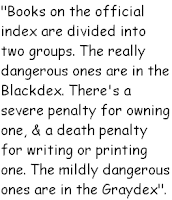
Table of contents (6 stories, best first, unread last).

My rating is in brackets. Where I have a separate post on a story, link on story title goes there. Link on author fetches more fiction by author.
  1. [novelette] Anthony Boucher's "One-Way Trip" (A): "An artist found a new way to handle the problem of self- portraiture - another man saw a way to world rule - another was doomed, shot out into space on the one-way trip to nowhere - because of a curious mineral!"
  2. [ss] A E van Vogt's "M 33 in Andromeda" (B): A group of human adventurers overcome a galaxy-sized monster!
  3. [ss] Fritz Leiber, Jr's "The Mutant's Brother" (B): "Twins raised apart from birth have very different characters - environment counts a lot. And if the twins are mutants, with unhuman powers, the application of those powers may be vastly different."
  4. [ss] Henry Kuttner & C L Moore's "Endowment Policy" (as by Lewis Padgett) (B): Security forces stop a man from tinkering with history by time-traveling to past, & changing a crucial event, that would have made him a despot! Much of the story is building anticipation. I might have liked it more if it was substantially shorter.

    Collected in "The Best of Henry Kuttner".
  5. [ss] Malcolm Jameson's "When is When?" (C): "Anachron Inc had things pretty well worked out. After all, time-traveling is bound to be safe, they figured. If a man gets into danger, you need only go back & warn him - unless he simply, inexplicably vanishes in Time -"
  6. [serial - part 1/2] C L Moore's "Judgement Night": "C L Moore's first science fiction novel - of a fight for the existence of an empire & a race, a fight that depended, in the end, of how one man & one woman handled their own affairs."

    Not read.

See also.

  1. Fiction from Analog/Astounding (only issues edited by Harry Bates, John Campbell).
  2. Stories written by John Campbell.
  3. Old "pulp" magazines.

Friday, September 18, 2009

Frederic Brown's "Daymare" (novelette, murder mystery)

Quote from short story titled Daymare by Frederic BrownThere has been a murder in town. Circumstances warranted quick cremation; only 5 men saw the corpse - among them a medico & the police investing officer. Cop saw a big wound on corpse's forehead - as if hit by an axe, medico saw a major wound on shoulder & says the victim died of shock, another cop who originally discovered the dead body says it was a bullet wound on his chest, ... Five witnesses of the dead body, each adamant the victim died a different way!

During investigations, there is another murder. A man dies due to a fall, but there is no injury! What is more, the dead man is the same as the one who recently died 5 different ways!

In the meantime, curious things have been happening around town.

Solving the case, after many twists & turns, will end up uncovering a conspiracy much bigger than 2 murders.

Story is set on Callisto, one of the moon of Jupiter, far in future.

Notes.

  1. Story has a major thread on governments banning books, with author justifying the idea in certain cases.

    I personally find the idea abhorrent. In virtually every single case of a book ban I've seen in India, it has been a case of abuse of government power. I personally cannot see a case where trusting men in power to tell us what we ought to know & what not is justified - if for no other reason than because it's impossible to ensure that men in authority will also be men of integrity.

    This story would have worked very differently if author didn't see justification in banning books.

Collected in.

  1. Isaac Asimov & Martin H Greenberg (Eds)' "Isaac Asimov Presents the Great SF Stories 5 (1943)".

Fact sheet.

First published: Thrilling Wonder Stories, Fall 1943.
Rating: A.
Related: Stories of Fredric Brown.

Tuesday, September 15, 2009

A E van Vogt's "The Storm" (novelette, space opera, free)

Humans & robots have had a lot of bad blood in the past. Now, thousands of years down the line, this apparently final war among them will end up having the opposite effect - a promise of a patch up.

Collected in.

  1. Isaac Asimov & Martin H Greenberg (Eds)' "Isaac Asimov Presents the Great SF Stories 5 (1943)".

Fact sheet.

First published: Astounding, October 1943.
Rating: B.
Download full text from BaenCD.
Included among the stories from John Campbell's Astounding/Analog.
Related: Stories of A E van Vogt.

Saturday, September 12, 2009

Isaac Asimov & Martin H Greenberg (Eds)' "Isaac Asimov Presents the Great SF Stories 5 (1943)" (anthology): Annotated table of contents & review

Cover image of anthology titled Isaac Asimov Presents the Great SF Stories 5 1943, edited by Isaac Asimov and Martin H GreenbergThis is #5 of a series of 25 anthologies by these editors. This book collects stories first published during the year 1943.

Where I'm aware of online copies, I provide download links. My rating is in brackets. Where I've a separate post on a the story, link on story title goes there. Link on author or publisher yields more of stories from the source.

Table of contents (12 stories, best first, unread last).

  1. [novelette] Henry Kuttner & C L Moore's "Mimsy Were the Borogoves" (as by Lewis Padgett) (A); download HTML, or read online at scribd; Astounding, February 1943; generation gap: Cognitive processes impossible to adults can be taught to very young kids.
  2. [novelette] Henry Kuttner & C L Moore's "The Proud Robot" (as by Lewis Padgett) (A); Astounding, October 1943; humor: Hilarious story about a robot in love with itself. Touches on some contemporary themes - video use in a way that annoys content owners, DRM (yes - in a 1943 story! - but in a manner technologically irrelevant to current times), & frivolous patents.
  3. [novelette] Fredric Brown's "Daymare" (A); Thrilling Wonder Stories, Fall 1943; murder mystery: Two murders in town - both of the same man! And both in impossible circumstances. Solving them uncovers a bigger conspiracy.
  4. [novelette] Eric Frank Russell's "Symbiotica" (B); Astounding, October 1943: Travails of inadvertently nasty human adventurers on an alien planet where animal & plant life-forms live in a much closer symbiosis than on earth, & where plants can be very nasty once provoked.
  5. [novelette] A E van Vogt's "The Storm" (B); download; Astounding, October 1943; space opera: Long drawn human/robot wars now show promise to end amicably.
  6. [novella] Henry Kuttner & C L Moore's "Clash by Night" (as by Lawrence O'Donnell) (B); read online (no download); Astounding, March 1943; war: Description of a war in a society where countries don't keep militaries, but hire the services of independent military companies for both attack & defense! Set on Venus.
  7. [ss] Henry Kuttner & C L Moore's "The Iron Standard" (as by Lewis Padgett) (B); Astounding, December 1943: When "man hour standard" replaced "gold standard" for currency valuations.
  8. [ss] Edmond Hamilton's "Exile" (B); Super Science Stories, May 1943: When a science fiction writer had to live in the world he had imagined in a story!
  9. [novelette] P Schuyler Miller's "The Cave"; Astounding, January 1943: Not read.
  10. [novelette] Leigh Brackett's "The Halfling"; Astonishing Stories, February 1943: Not read.
  11. [ss] Anthony Boucher's "Q.U.R."; Astounding, March 1943: Not read.
  12. [ss] C L Moore's "Doorway into Time"; Famous Fantastic Mysteries, September 1943: Not read.

Fact sheet.

First published: 1981 (DAW).
Relevant entries have been added to the list of stories from John Campbell's Astounding.
Some of the bibliographical information here comes from ISFDB.
Legend: ss = short story.

Tuesday, June 16, 2009

Fredric Brown's "The Geezenstacks" (short story, mysterious gadget, free)

Uncle Richard gave the package containing the 4 wax dolls to his nine-year old niece Aubrey Walters; he'd found the package under strange circumstances.

Over the following days, the child's dad will discover strange things apparently linked to dolls. Child has associated her own family members with each doll - Papa Geezenstack, Mama Geezenstack, Aubrey Geezenstack, & Uncle. Whatever she makes her dolls do during a play actually happens to corresponding member of the family soon!

Notes.

  1. I didn't quite follow the ending.

Fact sheet.

First published: Weird Tales, September 1943.
Rating: B.
Download full text from Internet Archive.
Included in SciFiction's classics archives.
Related: Stories of Fredric Brown; Mysterious gadget stories.

Sunday, May 10, 2009

Fredric Brown's "The Hat Trick" (as by Felix Graham) (short story, free)

Quote from short story titled The Hat Trick by Fredric BrownNot a bad read, except for ending that escaped me. I'm not sure I see what makes it a supposedly famous story.

Story summary.

Four teenagers - 2 boys & 2 girls - are having a little party, with boys showing magic tricks. Girls are appropriately impressed but the other guy must spoil the magician's trick. Until one of them pulls up the really convincing trick...

Fact sheet.

First published: Unknown Worlds, February 1943.
Rating: B.
Download full text from Internet Archive.
Included in Ellen Datlow's Sci Fiction classics.
Related: Stories of Fredric Brown.

Monday, March 30, 2009

"Amazing Stories", August 1943 (magazine, free): Table of contents & download link

Front cover image of Amazing Stories magazine, August 1943 issue. A painting by Robert Fuqua, illustrating a scene from short story A Patriot Never Dies by Frank PattonScans of this magazine are available online as part of a larger package.

Table of contents.

  1. [novelet] Frank Patton's "A Patriot Never Dies": "Who was John Smith? And what sort of a pact made him risk his life without even an explanation?"
  2. [novelet] Francis Wilson Powell's "Pop Gun": "The Arcturus was worse than doomed. Her one gun was a toy compared to the enemy. Just a toy..."
  3. [novelet] Henry Norton's "Prison in Space": 'The prison ship blasted off into space - & the word "prison" took on an entirely new meaning!'
  4. [novel] Craig Ellis' "Dr Varsag's Second Experiment": "No one guessed the real purpose of the mole-man because the operation changed more than his body..."
  5. [novelet] William DeLisle's "The Degenerate Mr Smith": "Smith was unfit for New Order, so he faced elimination - an elimination even he didn't foresee!"
  6. [short novel] Lee Francis' "Stone Godess of Yunan": "Somewhere in China was a stone image- & a weird goddess. But no one believed it was alive...!"
  7. [short story] Leroy Yerxa's "The Spirit of Egypt": "There are things in Egypt which are Time's mysteries - & they can become frighteningly manifest."

Sunday, May 4, 2008

Henry Kuttner & C L Moore's "Clash by Night" (short story, science fiction, free)

An alternate military organization. Unarmed city states, & independent military companies!

You want to attack another city states? Hire one of the military companies for a certain duration! Ditto for defense. Of course, same company will sometimes be hired by two different states. Loser state usually needs to pay tribute.

Story is set on Venus. Human colony comprises of under-sea domed cities that are the unarmed states. Military camps are in the wilderness that is Venusian surface. Story is told from the perspective of a high-ranking officer in one of these military companies.

I think this was the story that was later expended to Kuttner/Moore novel "Fury" (but am not sure).

One episode in the story involves the officer & one more character walk through a stretch of dangerous Venusian wilds. This part of the story has adventures very similar to Stanley Weinbaum's "Parasite Planet".

Collected in.

  1. Isaac Asimov & Martin H Greenberg (Eds)' "Isaac Asimov Presents the Great SF Stories 5 (1943)".
  2. John W Campbell, Jr (ed)'s "The Astounding Science Fiction Anthology".

Fact sheet.

First published: Astounding Science Fiction, March 1943.
Rating: B
Read online at WOWIO (no download)

Saturday, May 3, 2008

* Henry Kuttner's "Endowment Policy" (short story, science fiction)

Security forces stop a man from tinkering with history by time-traveling to past, & changing a crucial event, that would have made him a despot! Much of the story is building anticipation. I might have liked it more if it was substantially shorter.

Fact sheet.

First published: Astounding, August 1943.
Rating: B

Note: Why is this post so short?

Sunday, February 17, 2008

Henry Kuttner's "Nothing but Gingerbread Left" (short story): A musical super-weapon for World War II!

Quote from the short story titled Nothing but Gingerbread Left by Henry KuttnerAnother funny tale that needs suspended credulity.

Story summary.

Phil Rutherford, "in charge of semantics at the University", along with his student Jerry O'Brien, has discovered the power of meaningless but catchy chants as distractions. Whenever you are trying to do something, your unconscious goes off singing the chant! And they've succeeded in making the US employ this as a weapon against Germany in this alternate World War II.

German version of title is the part of the chant. Allies have been broadcasting it wherever German troops are, & it's sort of caught off among those involved in war there.

We are treated to several amusing episodes of how the war would have proceeded, assuming this works. German troops searching weapons in a Polish village fail to locate them because of distraction, leading to a later defeat in a battle. A key scientist on some breakthrough not only fails to complete his project, but commits suicide because chant won't leave him alone. A fighter pilot & his colleague fail to react to enemy until it's too late because they were chanting. Some people in authority have recognized the destruction the chant is causing but are afraid of discussing the issue openly. Hitler fails to deliver an important speech because midway through, he keeps getting distracted!

See also.

  1. Arthur Clarke's "The Ultimate Melody": Another story that deals with the effects of catchy music on humans. But Clarke's version is more in line with a theme in modern cyberpunk - dream good dreams forever!
  2. Tensor's review of this story: Especially interesting are visitor's comments at the end of the page. People have actually thought a lot about this story.

Collected in.

  1. "The Best of Henry Kuttner"

Fact sheet.

"Nothing but Gingerbread Left", short story, review
First published: Astounding Science Fiction, January 1943.
Rating: A
Related: All stories by Henry Kuttner.

Saturday, February 16, 2008

Henry Kuttner & C L Moore's "The Proud Robot" (short story, science fiction): A robot in love with itself

Quote from short story titled The Proud Robot by Henry Kuttner and C L MooreApart from great entertainment, this hilarious story touches upon issues that are still relevant: frivolous patents to curtail competition, unconventional ways of distributing video that both annoys the content owners & hurts their bottomlines, & DRM (yes - DRM in a 1943 story!). While its technology is unrecognizable today, some of the issues remain relevant.

But the best part of the story is humor - story to be read with suspended credulity.

Corporate fight.

The story is set substantially later than 1980 in New York city. This is a world where movie theaters have all shut down. People prefer watching TV at home. Broadcasters hand out TV sets for free, but charge based on number of hours the set is tuned in.

Two big operators are Vox-View Pictures, owned by Harrison Brock, & Sonatone Television Amusement Corp, owned by Ella Tone. The story is about their corporate fight - because Sontatone has invented a new device called "Magna enlarger" that changes the market dynamics, hurting Vox-View. Sontatone has also taken enough patents on the device to ensure the competition just cannot build a competitive device!

What does Magna do? It takes the incoming broadcast, & makes it suitable for viewing on large screen. Sonatone have (re)opened a lot of movie theaters - all powered by Magna. Expensive ones show feeds of Sonatone, cheap ones show feeds of Vox-View. Of course, Vox-View doesn't get any share from theater earnings of its feed.

There is a part that probably involves suspension of belief because of the age of the story. Watching broadcast on large screen in a cinema house has become fashionable, & Vox-View customers have been canceling their subscriptions - adding to its vows.

And Sonatone has enough political connections that a court case will likely be lost. Vox-View needs a technical solution that doesn't violate Magna patents. It will eventually end up inventing DRM. But for that, we need to introduce Gallegher - an eccentric drunkard, but a brilliant inventor.

But wait a moment. There is an irrelevant romantic thread behind this corporate competition. James, Ella's son, wants to marry Patsy, Harrison's daughter. And she is not interested. Hence the pressure tactic. But the story would still be the same without this marriage talk.

The complication.

Harrison had hired Gallegher to work out a technical solution - at a time when Gallegher was in a drunken state. When the story opens, Gallegher is just sobering up. And finds himself in company of this no-good narcissist robot Joe. He has a vague recollection he built the robot for some purpose, but cannot recollect why!

This is the state where he gets a visit from Harrison, reminding him of the project. He will also get another visitor - Kennicott, from whom Gallegher had recently purchased some diamonds. Powdered form of those diamonds has apparently ended up inside Joe! Kennicott wants his payment - $12,000. Gallegher makes a promise & goes out to understand the project.

While at Vox-View office, he will get a visit from Joe. How did Joe come to know he was there? Following dialog fragment enlightens us:

"How'd you know where to reach me?"
"I vastened you," the robot said... "I vastened you were at the Vox-View studios, with Patsy Brock."
"What's vastened?" Gallegher wanted to know.
"It's a sense I've got. You've nothing remotely like it, so I can't describe it to you. It's like a combination of sagrazi and prescience."
"Sagrazi?"
"Oh, you don't have sagrazi, either..."

Anyway, Joe has come to inform Gallegher that Gallegher is now working for Sonatone rather than Vox-View!! "when Ella and James Tone came to the laboratory, ... I hypnotized them," Joe explained. "I made them think I was you. ... I signed the contract - it's your signature, by the way..."

Why did Joe do this? "they offered a hundred thousand, and two thousand a week for five years. But I merely wanted enough to pay Kennicott and make sure he wouldn't come back and bother me." You see, he didn't like Kennicott!

There will be a court case, but Gallegher cannot come out free because Joe is refusing to cooperate.

The resolution.

Dejected, at home, Gallegher will eventually make Joe hypnotize himself. Because that way, Joe can perhaps appreciate hidden parts of his beauty - accessible only via his subconscious! It's during this state that robot will tell Gallegher why he was created: "You were drinking beer, ... You had trouble with the can opener. You said you were going to build a bigger and better can opener. That's me." OK - so we know Joe is a can opener!!

Turns out - this revelation of purpose to Gallegher has taken away Joe's volition; he must now do what he is ordered. We will be told that the solution to Vox-View's problem is built into Joe: "You made me capable of a certain subsonic tone that Brock must broadcast at irregular time intervals over his televiews".

We are told humans cannot feel these subsonics at audio amplification at homes, but the response at a bootleg theater's volume is different: "They can be felt as a faint, irrational uneasiness at first, which mounts to a blind, meaningless panic."

Soon, bootleg theaters will lose their audience. And, by association, the expensive Sonatone theaters showing their own feed too will lose their customers. Heroes win!

See also.

  1. Henry Kuttner & C L Moore's "Vintage Season": Another story that makes use of a device to create subsonics to create a sense of terror in people.

Collected in.

  1. "The Best of Henry Kuttner".
  2. Raymond J Healy & J Francis McComas (Eds)' "Adventures in Time and Space".
  3. Isaac Asimov & Martin H Greenberg (Eds)' "Isaac Asimov Presents the Great SF Stories 5 (1943)".

Fact sheet.

"The Proud Robot", short story, review
This story has also been published as by Lewis Padgett, joint pseudonym of the two authors.
First published: Astounding Science Fiction, October 1943.
Rating: A
Related: All stories by Henry Kuttner, C L Moore & as Lewis Padgett.